Centri 180

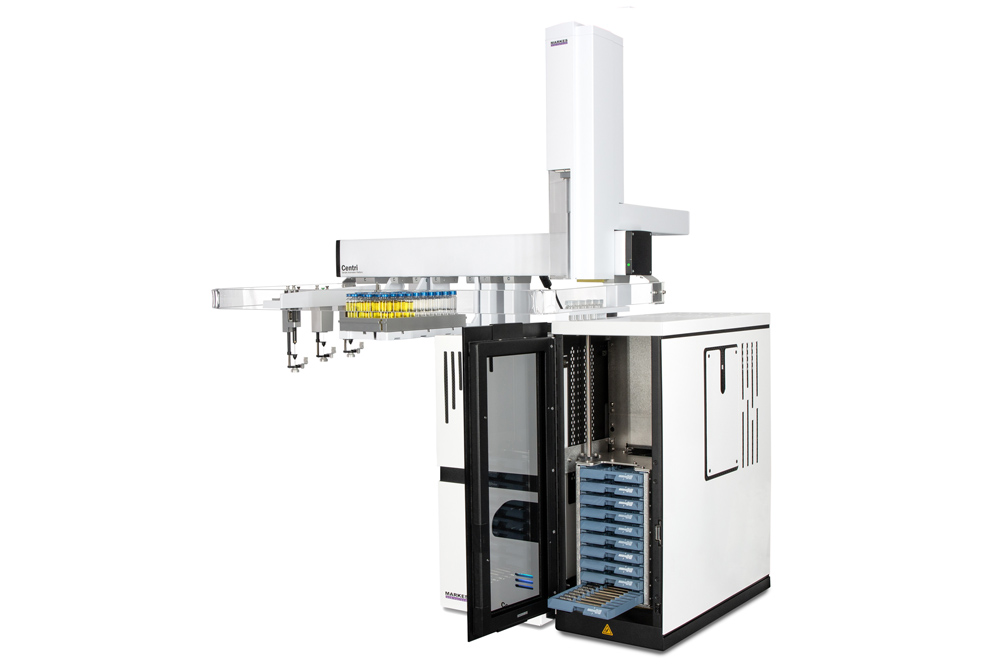
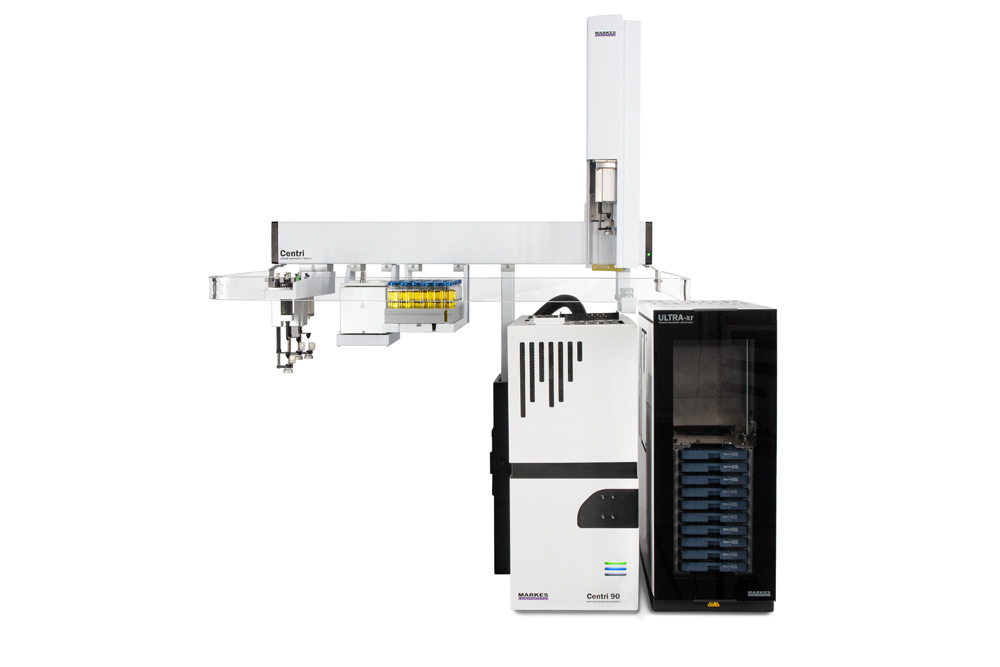
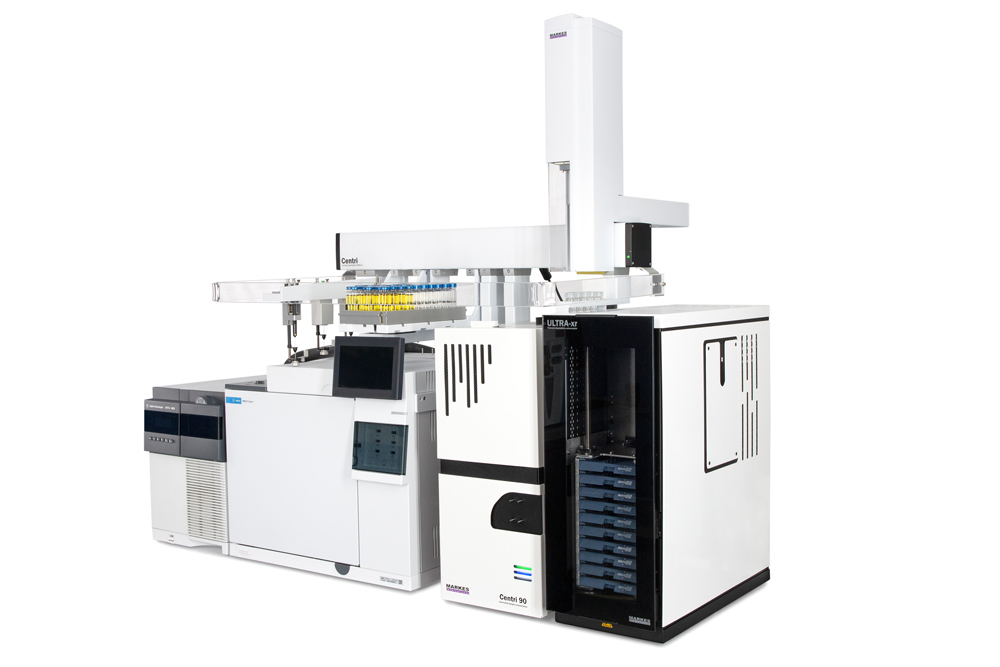
Centri 180 is an automated platform for high-sensitivity analysis using headspace, SPME and SPME Arrow, tube-based thermal desorption and HiSorb high-capacity sorptive extraction, with additional chromatographic performance provided by trap-based preconcentration.

SKU: CENTRI180 Category:

Description

Versatile platform for high-sensitivity routine analysis using headspace-, SPME-, TD and HiSorb-based workflows
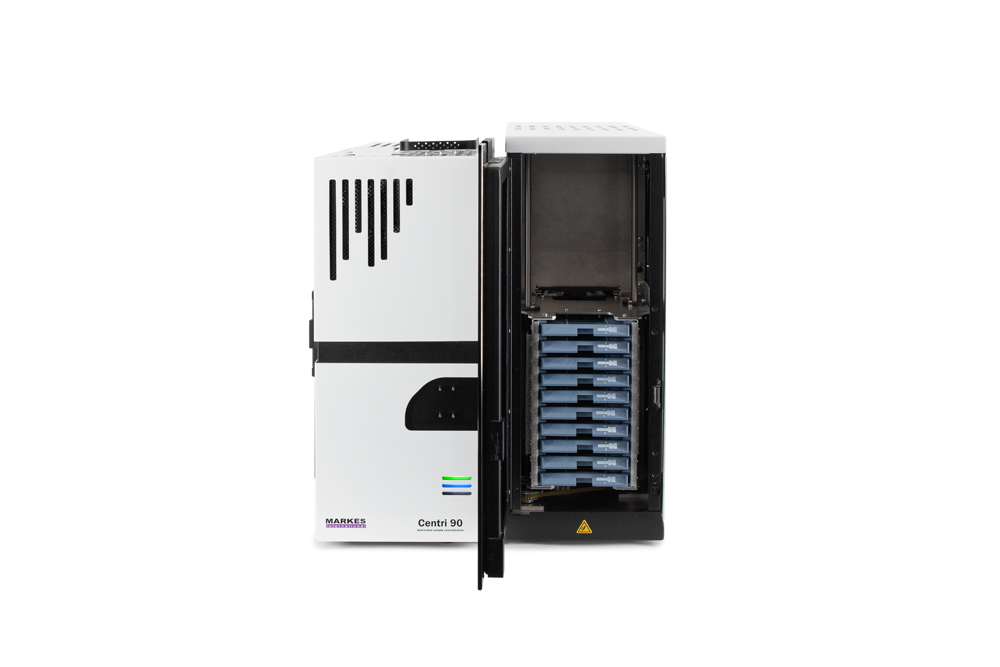
Centri 180 is an automated platform for high-sensitivity analysis using headspace, SPME and SPME Arrow, tube-based thermal desorption and HiSorb high-capacity sorptive extraction, with additional chromatographic performance provided by trap-based preconcentration.

By allowing busy laboratories to adapt to changes in demand for different applications, Centri 180 builds on the capabilities of the Centri 90, and is available as an upgrade from Centri 90. Throughout, efficiency is maintained by unattended sequencing of all application modes.

Centri 180 can be used with a choice of carrier gases (helium, hydrogen and nitrogen) enabling greater flexibility of analysis and cost-saving.

Description
Specifications (Base unit)
Specification (Base unit + robotics)
FAQs
Get a Quote
Downloads

Why use Centri 180?

  • Building on the functionality and advantages of Centri 90, Centri 180 offers:
    • Increased sensitivity for HS, SPME and SPME Arrow thanks to its cryogen-free, backflushed focusing trap, to bring unrivalled productivity to your laboratory.
    • Faster chromatographic speed and lower cost of ownership by adopting H2 carrier gas, now or in the future.
    • Thermal desorption of sorbent-packed tubes, including direct thermal extraction, for VOCs and SVOCs in air and materials.
    • Full compliance with industry-standard tubes and therefore, standard methods such as ISO 16000-6, VDA 278 and US EPA Method TO-17.
    • HiSorb sorptive extraction for off-line sampling of VOC and SVOC in solids and liquids, and fully automated analysis of HiSorb probes.

Centri 180 features?

  • Headspace–trap – Versatile sampling from solids and liquids contained in regular headspace vials.
  • SPME–trap and SPME Arrow–trap – Fast and sensitive sample extraction, with a range of fibre types offering analyte selectivity.
  • Thermal desorption – Using industry-standard tubes to analyse VOCs and SVOCs in air, or released from materials.
  • HiSorb™ high-capacity sorptive extraction – Robust probe-based immersive or headspace sampling from liquids and solids.

Who uses Centri 180?

  • Laboratories interested in routine, high-sensitivity analyses of VOC and SVOC in solid, liquid and gaseous samples on a single GC–MS platform.
  • Chemists dealing with large quantities of different sample types, in a fully automated fashion.
  • Analysts seeking compliance with national and international standard methods.
  • Centri Inlet

  • Operating temperature:
    50°C to 400°C in one degree increments
    Compatible carrier gases:
    Helium, Nitrogen
    Carrier gas regulation requirements:
    A pressure-controlled 0–60 psig (0–415 kPa) supply of hydrogen, helium or nitrogen carrier gas under manual or electronic control.
    N.B. If using hydrogen as the carrier gas for the GC, a secondary pressure controlled carrier gas, either helium or nitrogen, will be required for the Centri inlet operation and an additional pressure regulator (U-GAS03) is also needed in this case.
  • PAL3 agitator module

  • Six positions for standard 10/20 mL vials.
    Required for use with Centri methods, PAL3 standard and custom scripts.
    Agitation speed:
    250-750rpm. Settable in 1rpm increments
    Incubation temperature:
    30°C to 200°C settable in 1 degree increments
  • PAL3 Heatex stirrer (necessary for SPME Arrow modes)

  • Powerful mixing and heating
    Optimised for 20 mL vials (specific inserts required to accommodate 10 mL vials, U-CENTRI-HTXINS10).
    Required for use with Centri methods, PAL3 standard and custom scripts.
    Temperature range:
    30°C to 150°C
    Stirring speed:
    Up to 1600rpm
  • Focusing Trap

  • Backflush desorption ensures quantitative retention and release of compounds across a wide volatility range.
    Quartz focusing trap:
    2 mm i.d. (where packed) and 0.9 mm i.d. at the sample input/output end.
    Easy to maintain: Collar at non-sampling end makes trap easy to change.
    Central 60 mm packed with up to four sorbents.
    Trap low temperature range:
    -30°C to 50°C
    Settable in 1°C increments. Uniform electrical cooling applied over full 60 mm length of sorbent bed.
    Trap desorption:
    Default setting is ballistic heating, which reaches rates of 100°C/s during the first critical stages of secondary (trap) desorption.
    Alternatively, programmed trap heating rates from 1°C/s to 40°C/s can be selected.
    Trap high temperature:
    Range: 35°C to 425°C settable in 1°C increments
    Uniform heating applied over full length of sorbent bed.
    Temperature limits are user-settable within the stated range.
    Hold time at trap high temperature:
    0.1 to 60 min. Settable in 0.1 min increments
  • Sample flow path

  • Temperature range:
    Valves: 50°C to 210°C
    Transfer line:
    50°C to 250°C
    Both settable in 1°C increments
    Temperature limits are user-settable within the stated range.
    Constructed entirely of inert materials: PTFE, quartz, inert-coated stainless steel, and uncoated, deactivated fused silica.
  • Pneumatics

  • Centri 180 requires:
    A pressure-controlled 0–60 psig (0–415 kPa) supply of hydrogen, helium or nitrogen carrier gas under manual or electronic control.
    N.B. If using hydrogen as the primary carrier gas for the GC, a secondary pressure-controlled carrier gas, either helium or nitrogen, will be required for the Centri inlet operation and a pressure regulator (U-GAS03) also needed in this case.
    A pressurised supply of dry air or nitrogen (dewpoint below –50°C) at 50–60 psig (340– 415 kPa). The dry gas is used for pneumatic actuation of the heated valve and, if configured, the internal standard accessory rotor valve, and for purging the focusing trap box. N.B. Helium or hydrogen cannot be used as the dry gas supply.
    Electronic mass flow control is settable between 2–500 mL/min (helium and hydrogen), and 2–250 mL/min (nitrogen).
    Carrier gas and dry air or nitrogen pressure control is regulated by the hydrogen-approved pneumatic control accessory (U-GAS01-H) included in the shipping kit.
    An additional pneumatic control accessory (U-GAS03) is required for the Centri inlet carrier supply if hydrogen is used as the GC carrier gas.
  • Gas consumption

  • Dry air or nitrogen:
    Average consumption: ~150 mL/min.
    Carrier gas consumption:
    Method-dependent (typically 5–200 mL/min).
  • System checks and controls

  • Leak testing is available in all Centri trap-enabled modes to safeguard sample integrity.
    The system diagnostics mode assesses Centri 180 for leaks and correct valve operation.
  • Sample splitting/re-collection

  • Centri 180 offers a number of sample splitting options, dependent on the sampling mode.
    The inlet split re-collection (when available) is always manual.
    In all cases, when a tube autosampler module is fitted, it is possible to automatically re-collect the outlet (trap desorption) split flow onto a clean sorbent tube, and then automatically analyse it (See Centri 180 specification sheet, document number ).
    Splitting options for HS–trap are:
    During secondary (trap) desorption only (outlet split).
    Splitless analysis.
    Splitting options for SPME–trap and SPME Arrow–trap are:
    During primary (fiber/Arrow) desorption only (inlet split).
    During secondary (trap) desorption only (outlet split).
    During both desorption stages (double split).
    Splitless analysis.
    Splitting options for thermal desorption are:
    During primary (tube) desorption only (inlet split).
    During secondary (trap) desorption only (outlet split).
    During both desorption stages (double-split).
    Splitless analysis.
    The split flows can be turned on or off during system standby and at any stage during pre‑purge.
    Split and desorb flows are controlled electronically using mass flow controller accessories (2–500 mL/min (helium and hydrogen) and 2–250 mL/min (nitrogen)), which allow split ratios from 0 to 125,000 : 1 to be used with standard capillary columns.
    The split vent line contains a charcoal filter in front of the control valves (and MFC) to prevent contamination of the valves/MFC and laboratory atmosphere. The charcoal filter is connected to the main heated valve via a short, inert, heated flow path.
  • Dimensions and weight - Tube autosampler

  • Depth:
    550mm
    Width:
    240mm
    Height:
    620mm
    Weight:
    23kg unloaded, 28kg fully loaded
  • Dimensions and weight - Centri 180

  • Depth:
    560mm
    Width:
    555mm
    Weight:
    63kg unloaded, 68kg fully loaded
  • When integrated with a rail

  • Height (including robot):
    1285mm
    Height (not including robot or robot leg):
    620mm
    Weight of rail:
    23kg, depending on module configuration.
    N.B. Allow an additional ≥ 200 mm space between back of the equipment and wall to dissipate hot air and to connect all necessary plumbing.
    The rail (all widths) will require an additional 190 mm overhang space behind the base unit (950 mm total depth). Inclusion of a Peltier stack attached to the rail would require an additional 100 mm overhang space behind the base unit (1050 mm total depth).
  • Ambient operating conditions

  • Temperature:
    15°C to 30°C
    Relative humidity:
    5–95% RH (non-condensing)
  • Power requirements

  • 100–240 V, 50/60 Hz, 1375 W (Centri 180 self-adjusts to local voltage input).
  • Minimum PC specification

  • For system control:
    CPU: 1 GHz 64-bit dual-core or better.
    RAM: 4 GB.
    Hard disk space: 2 GB.
    Graphics card: DirectX® 9 or later.
    Display: 1024 × 768 display.
    Operating system: Windows® 10 64-bit.
    Other requirements: Windows-compatible keyboard and mouse.
    Two free USB connections and one free LAN connection for Centri 90 communication with PC.
  • GC remote cable connectors

  • Centri 180 includes a GC interface cable that connects to the ‘ready’ output and ‘start’ input of the GC(–MS) and data-handling systems.
    The cable supports automatic start of the entire analytical system when the focusing trap desorbs, and allows the system to check the ‘ready’ status of the analyser and associated data handling.
    The focusing trap will not desorb until it receives a ‘ready’ signal from the GC(–MS) system.
    A Y-splitter cable and PAL3 GC interface cable are included in the mounting kits, enabling both PAL3 scripts (injecting via GC inlet) and Centri methods (via Centri inlet) to be used on one platform.
  • Safety and regulatory certification

  • The instrument is designed and manufactured under a quality system registered to ISO 9001.
    The instrument complies with the essential requirements of the following applicable European Directives, and carries the CE mark accordingly:
    – Low Voltage Directive 2014/35/EU.
    – EMC Directive 2014/30/EU.
    The instrument conforms to the following product safety standards:
    – IEC 61010-1/EN 61010-1.
    – Canada: CSA C22.2 No.61010-1.
    – USA: ANSI/UL 61010-1.
    The instrument conforms to the following regulation on electromagnetic compatibility (EMC):
    – IEC 61326-1/EN 61326-1.
  • Centri Inlet

  • Operating temperature:
    50°C to 400°C. Settable in 1°C increments.
    Compatible carrier gases:
    Helium, Nitrogen
    Carrier gas regulation requirements:
    A pressure-controlled 0–60 psig (0–415 kPa) supply of hydrogen, helium or nitrogen carrier gas under manual or electronic control.
    N.B. If using hydrogen as the carrier gas for the GC, a secondary pressure controlled carrier gas, either helium or nitrogen, will be required for the Centri inlet operation and a pressure regulator (U-GAS03) also needed in this case.
  • PAL3 agitator module

  • Six positions for standard 10/20 mL vials.
    Required for use with Centri 90 methods, PAL3 standard and custom scripts.
    Agitation speed:
    Range: 250–750 rpm. Settable in 1 rpm increments.
    Incubation temperature:
    Range: From 30°C to 200°C. Settable in 1°C increments.
  • PAL3 Heatex stirrer (necessary for SPME Arrow modes)

  • Powerful mixing and heating.
    Optimised for 20 mL vials (specific inserts required to accommodate 10 mL vials, U-CENTRI-HTXINS10).
    Required for use with Centri methods, PAL3 standard and custom scripts.
    Temperature range:
    30–150°C.
    Stirring speed:
    up to 1600 rpm
  • Focusing trap

  • Quartz focusing trap:
    2 mm i.d. (where packed) and 0.9 mm i.d. at the sample input/output end.
    Easy to maintain: Collar at non-sampling end makes trap easy to change.
    Central 60 mm packed with up to four sorbents.
    Backflush desorption ensures quantitative retention and release of compounds across a wide volatility range
    Trap low temperature:
    Range: –30°C to 50°C. Settable in 1°C increments.
    Uniform electrical cooling applied over full 60 mm length of sorbent bed.
    Trap desorption:
    Default setting is ballistic heating, which reaches rates of 100°C/s during the first critical stages of secondary (trap) desorption.
    Alternatively, programmed trap heating rates from 1°C/s to 40°C/s can be selected.
    Trap high temperature:
    Range: 35°C to 425°C. Settable in 1°C increments.
    Uniform heating applied over full length of sorbent bed.
    Temperature limits are user-settable within the stated range.
    Hold time at trap high temperature:
    Range: 0.1–60 min.
    Settable in 0.1 min increments.
  • Sample flow path

  • Temperature range:
    Valves: 50°C to 210°C.
    Transfer line: 50°C to 250°C.
    Both settable in 1°C increments. Temperature limits are user-settable within the stated range.
    Constructed entirely of inert materials: PTFE, quartz, inert-coated stainless steel, and uncoated, deactivated fused silica.
  • Pneumatics

  • Centri 180 requires:
    A pressure-controlled 0–60 psig (0–415 kPa) supply of hydrogen, helium or nitrogen carrier gas under manual or electronic control.
    N.B. If using hydrogen as the carrier gas for the GC, a secondary pressure-controlled carrier gas, either helium or nitrogen, will be required for the Centri inlet operation and a pressure regulator (U-GAS03) also needed in this case.
    A pressurised supply of dry air or nitrogen (dewpoint below –50°C) at 50–60 psig (340– 415 kPa). The dry gas is used for pneumatic actuation of the heated valve and, if configured, the internal standard accessory rotor valve, and for purging the focusing trap box.
    N.B. Helium or hydrogen cannot be used as the dry gas supply.
    Electronic mass flow control is settable between 2–500 mL/min (helium and hydrogen), and 2–250 mL/min (nitrogen).
    Carrier gas and dry air or nitrogen pressure control is regulated by the hydrogen-approved pneumatic control accessory (U-GAS01-H) included in the shipping kit.
    An additional pneumatic control accessory (U-GAS03) is required for the Centri inlet carrier supply if hydrogen is used as the primary GC carrier gas.
  • Gas consumption

  • Dry air or nitrogen:
    Average consumption: ~150 mL/min.
    Carrier gas consumption:
    Method-dependent (typically 5–200 mL/min).
  • System checks and controls

  • Leak testing is available in all Centri 90 trapenabled modes to safeguard sample integrity.
    The system diagnostics mode assesses Centri 90 for leaks and correct valve operation.
  • Sample splitting/re-collection

  • Centri 180 offers a number of sample splitting options, dependent on the sampling mode.
    The inlet split re-collection (when available) is always manual.
    In all cases, it is possible to automatically re-collect the outlet (trap desorption) split flow onto a clean sorbent tube in the tube autosampler, and then automatically analyse it.
    Splitting options for HS–trap are:
    During secondary (trap) desorption only (outlet split).
    Splitless analysis.
    Splitting options for SPME–trap and SPME Arrow–trap are:
    During primary (fiber/Arrow) desorption only (inlet split).
    During secondary (trap) desorption only (outlet split).
    During both desorption stages (double split).
    Splitless analysis.
    Splitting options for thermal desorption are:
    During primary (tube) desorption only (inlet split).
    During secondary (trap) desorption only (outlet split).
    During both desorption stages (double-split).
    Splitless analysis.
    Split flow information:
    The split flows can be turned on or off during system standby and at any stage during pre‑purge.
    Split and desorb flows are controlled electronically using mass flow controller accessories (2–500 mL/min (helium and hydrogen) and 2–250 mL/min (nitrogen)), which allow split ratios from 0 to 125,000 : 1 to be used with standard capillary columns.
    The split vent line contains a charcoal filter in front of the control valves (and MFC) to prevent contamination of the valves/MFC and laboratory atmosphere. The charcoal filter is connected to the main heated valve via a short, inert, heated flow path.
  • Dimensions and weight: Tube autosampler (with 80cm rail)

  • Depth:
    550mm.
    Width:
    240mm.
    Height:
    620mm.
    Weight:
    23kg unloaded, 28kg fully loaded.
  • Dimensions and weight Centri 180 (80cm rail)

  • Depth:
    560 mm.
    Height (including robot):
    1285mm.
    Height (not including robot or robot leg):
    620mm.
    Width:
    555mm.
    Weight of Centri 90:
    63kg unloaded, 68kg loaded
    Rail:
    23kg depending on configuration
  • Dimensions and weight (160cm rail)

  • In addition to the Centri 180 unit dimensions and weight above.
    Width of robot:
    1630mm
    Weight:
    23kg (depending on configuration).
    N.B. Allow an additional ≥ 200 mm space between back of the equipment and wall to dissipate hot air and to connect all necessary plumbing.
    The robotic arm (all widths) will require an additional 190 mm overhang space behind the base unit (950 mm total depth). Inclusion of a Peltier stack attached to the rail would require an additional 100 mm overhang space behind the base unit (1050 mm total depth).
  • Ambient operating conditions

  • Temperature:
    15°C to 30°C.
    Relative humidity:
    5–95% RH (non-condensing).
  • Power requirements

  • 100–240 V, 50/60 Hz, 1375 W (Centri 180 self-adjusts to local voltage input).
    100-240 V, 50/60 Hz, 200 W (PAL3 robotics self-adjusts to local voltage inputs).
    100-240 V, 50/60 Hz, 200 W (Tray Cooler, if configured, self-adjusts to local voltage input).
  • Minimum PC specification

  • For system control:
    CPU: 1 GHz 64-bit dual-core or better.
    RAM: 4 GB.
    Hard disk space: 2 GB.
    Graphics card: DirectX® 9 or later.
    Display: 1024 × 768 display.
    Operating system: Windows® 10 64-bit.
    Other requirements: Windows-compatible keyboard and mouse.
    Two free USB connections and one free LAN connection for Centri 180 communication with PC.
  • GC remote cable connections

  • Centri 180 includes a GC interface cable that connects to the ‘ready’ output and ‘start’ input of the GC(–MS) and data-handling systems.
    The cable supports automatic start of the entire analytical system when the focusing trap desorbs, and allows the system to check the ‘ready’ status of the analyser and associated data handling.
    The focusing trap will not desorb until it receives a ‘ready’ signal from the GC(–MS) system.
    A Y-splitter cable and PAL3 GC interface cable are included in the mounting kits, enabling both PAL3 scripts (injecting via GC inlet) and Centri methods (via Centri inlet) to be used on one platform.
  • Safety and regulatory certification

  • The instrument is designed and manufactured under a quality system registered to ISO 9001.
    Low Voltage Directive 2014/35/EU.
    EMC Directive 2014/30/EU.
    The instrument conforms to the following product safety standards:
    IEC 61010-1/EN 61010-1/EN 60079-2
    Canada: CSA C22.2 No.61010-1.
    USA: ANSI/UL 61010-1.
    The instrument conforms to the following regulation on electromagnetic compatibility (EMC):
    IEC 61326-1/EN 61326-1.
  1. What is SPME? Solid-phase microextraction (SPME) is a technique for getting VOCs and SVOCs from a sample into a GC-MS. It utilises a thin fibre to adsorb/absorb compounds and is suitable for solids (headspace), as well we liquids (headspace and immersive).
  2. What are the applications for SPME? Testing aroma/flavour compounds in food, pollutants in soil and water, biomarkers in clinical samples, or odorants in drinking water.
  3. What are the advantages of SPME? Advantages: • Desorption of fibre is fast • More flexible technique than purge-and-trap • Process can be automated • Reduced water issues compared to headspace injection • Range of fibre types allow selectively for different analytes • No solvent is required • Relatively low cost per sample With a sorbent-packed focusing trap there are also these advantages: • Trapping improves peak shape and boosts sensitivity • Combining multiple extractions can boost sensitivity • Splitting and re-collection of single samples allows for storage or repeat analysis/validation • Variation of split flows at the trap stage improves capability to handle wide concentration ranges • Improved options for removing water result in better chromatography
  4. What are the disadvantages of SPME? • Small fibre volume limits sensitivity • Fibres have fairly narrow analyte ranges • Fibres are easily saturated with high-abundance analytes • Silica-core fibres are easily broken • Immersive SPME can suffer from cross-contamination • Immersive SPME is not suitable for dirty matrices • Quantitation can be complicated
  5. I’m not working with air samples, so why would I need thermal desorption? It’s true that thermal desorption is most widely known as a preconcentration technique for ambient air, but the simplicity and automation of the technique has led to its widespread use for a wide range of other matrices that are not amenable to direct GC analysis. This versatility is illustrated by its use for direct desorption (dynamic headspace) of solids and liquids and the field sampling of soil, water and breath using dedicated accessories.
  6. Don’t I need liquid cryogen to achieve a wide target analyte range? No – modern Peltier-cooled TD systems dispense with the cost and inconvenience of cryogen, and can trap analytes ranging from C2 to C44. Not only that, but in Markes’ instruments, use of backflush desorption allows tubes and traps to be packed with multiple sorbents, extending the analyte range that can be monitored in a single run.
  7. Can I analyse target and non-target compounds? Yes – the majority of sorbents are not compound-selective, and can capture analytes over a broad range. They work by adsorbing suites of compounds based primarily on their boiling point and physical properties. The use of multiple sorbents increases the volatility range that can be analysed in a single sample.
  8. Can I analyse reactive species using thermal desorption? Yes – but the TD instruments need to be optimised to prevent degradation of reactive or thermally labile compounds. Fully inert flow paths, low flow path temperatures (as low as 50°C) and gentle heating rates in Markes’ thermal desorbers combine to support routine analysis of challenging species like odorous sulfur compounds.
  9. Is TD suitable for semi-volatile organic compounds (SVOCs)? Yes – Markes’ TD-specific heated valve provides an inert, low-volume, consistently heated flow path, ensuring fast, efficient transfer of high-boiling compounds up to C44, including PAHs, PCBs and phthalates. Other thermal desorbers, without an optimised valve, can suffer from cold spots. This results in loss of high-boiling compounds, and such instruments therefore require much higher temperatures to analyse SVOCs.
  10. I have volatile analytes and very humid samples. Can I still use TD tubes? Yes – by optimising sorbent selection, temperature, purging and split ratios it’s possible to quantitatively retain very volatile compounds, such as chloromethane and propylene (US EPA Method TO-17), and reduce water sufficiently for GC or GC–MS analysis.
  11. Yes – by optimising sorbent selection, temperature, purging and split ratios it’s possible to quantitatively retain very volatile compounds, such as chloromethane and propylene (US EPA Method TO-17), and reduce water sufficiently for GC or GC–MS analysis. No – this is a common misconception. Markes’ instruments allow samples to be split during the tube desorption and/or trap desorption stages. The split portions can then be ‘re-collected’ onto a sorbent tube. In this way you can achieve reliable repeat analysis of a single sample multiple times.
  12. I don’t archive my samples, so why would I need re-collection? Re-collection has numerous other benefits. It can be used to simplify method validation, enable confirmatory identification using a different detector, and even extend the storage stability of many sample types. In addition, re-collection can be used to extend the dynamic range of a method by automatically analysing a sample at two different split ratios (‘Hi/Lo’ analysis).
  13. How should gas standards be introduced for calibration and QA using tubes? External standards can be loaded onto TD tubes as gases or liquids in a flow of gas to vaporise solvents and carry analytes onto the sorbent beds in the tube. Many TD instruments can also automatically add a precise aliquot of gas-phase internal standard to tubes or traps for quality assurance.
  14. How do I validate correct calibration? Use certified reference standard (CRS) tubes. These are freshly packed, stringently conditioned sorbent tubes preloaded with a certified mass of analyte(s) and capped for long-term storage.

Get a Quote

Download Spec Sheets


Couldn't find the product you were looking for?

We have an ever-increasing range of products, so we may just have it in stock already. If we don't, there is a good chance we can source it for you.